
Let’s talk about making love…
What I aim to do through my art practice is bring people together and build connection and community. I facilitate a process of co-creation and invite people to participate because I believe art is not finished until the audience is participating or contributing to creating the final work.
My art practice is built around four key principles: permission, experience, collaboration and participation.
And so this year for Yam, I decided to create a forest of love. Because what the world needs right now is love. Right?
But what does love look like? And if you were to encounter an enchanted forest of love, what would you expect to find within it?
How do we define love? Is it all rainbows and unicorns? Does it end with a diamond ring? Does it look like chocolate, champagne and roses?
Who do you love? What do you love? It’s so yummy to love and to be loved. How much love to you have to give?
These were some of the questions I asked in thinking about creating the forest of love.
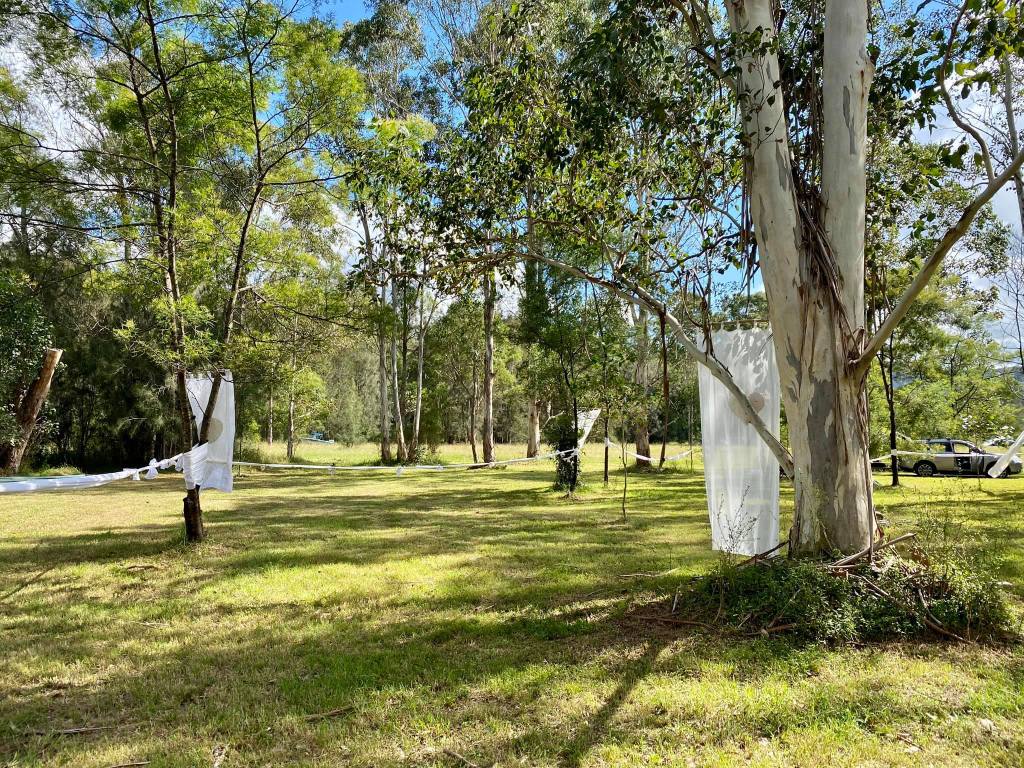
I wanted to create a space in which could people were invited in to explore and experience various different types of love, to consider how they might figure in our lives and respond to these in whichever way people feels expresses what love means to them.
Infinite sorts of love are possible. Love is often very narrowly defined in our ‘normal’ narratives, but love can look like anything, if we can expand your imagination beyond those tiny narrow narratives.
This first iteration of the concept explores 8 types of love:
- Philia – friendship love: Affectionate love: love of friends and equals
- Pragma – enduring love: Staying together is a choice. It’s about making a conscious choice every day to love this person – or these people.
- Storge – familial love: Love of the child: love of parents for children
- Eros – infatuation: Love of the body: erotic, passionate love
- Ludus – flirtation: Playful, uncommitted love
- Mania – obsessive love: We fall in love not just with a person wholly external to us but with a fantasy of how that person can fill what is missing from our interior lives.
- Philautia – Love of the self: coming into your own heart centre
- Agape – selfless love: Love of mankind, of the world and everything in it
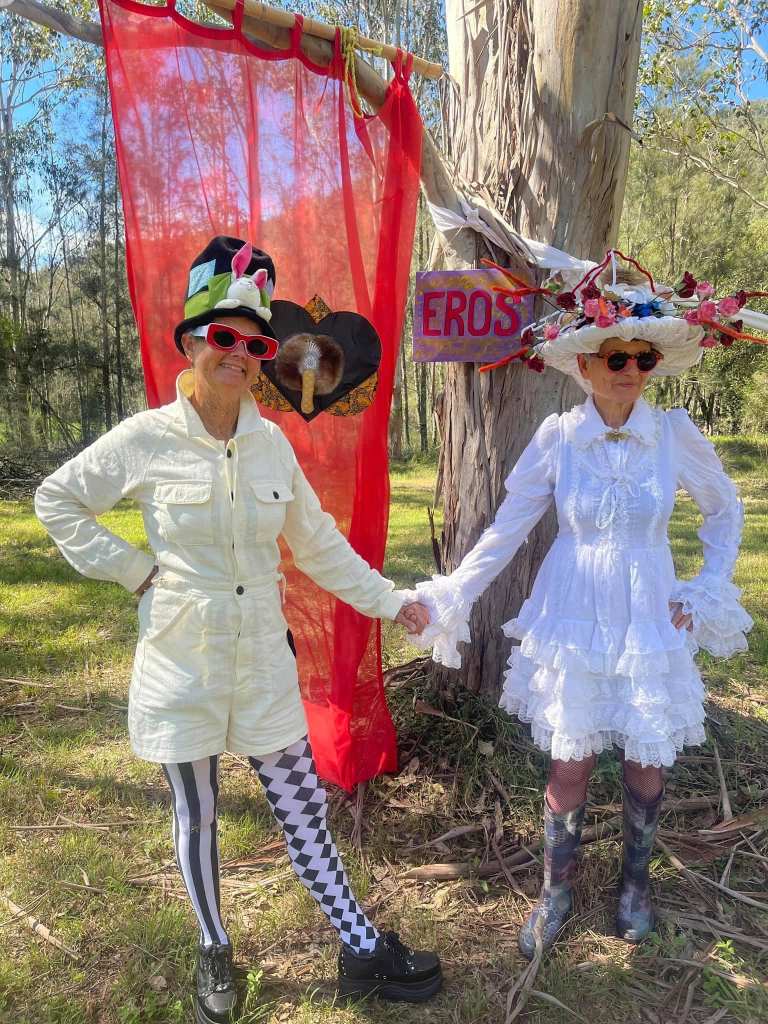
Why a forest?
Love is like a forest.
There are many paths through a forest. Not all will lead us where we want to go. Not all will take us by the direct route. Sometimes there will be obstacles or blockages put in our way. Some paths will lead us astray. And sometimes straying from the path will get us into trouble or help us discover unexpected delights.
Love doesn’t just grow – it needs to be nurtured to grow strong and be healthy. Like a tree, as it grows, it’s root system is larger than its canopy. It’s roots run deep and help to stabilize it. But even the strongest tree can be broken or toppled over by a storm.
What’s next?
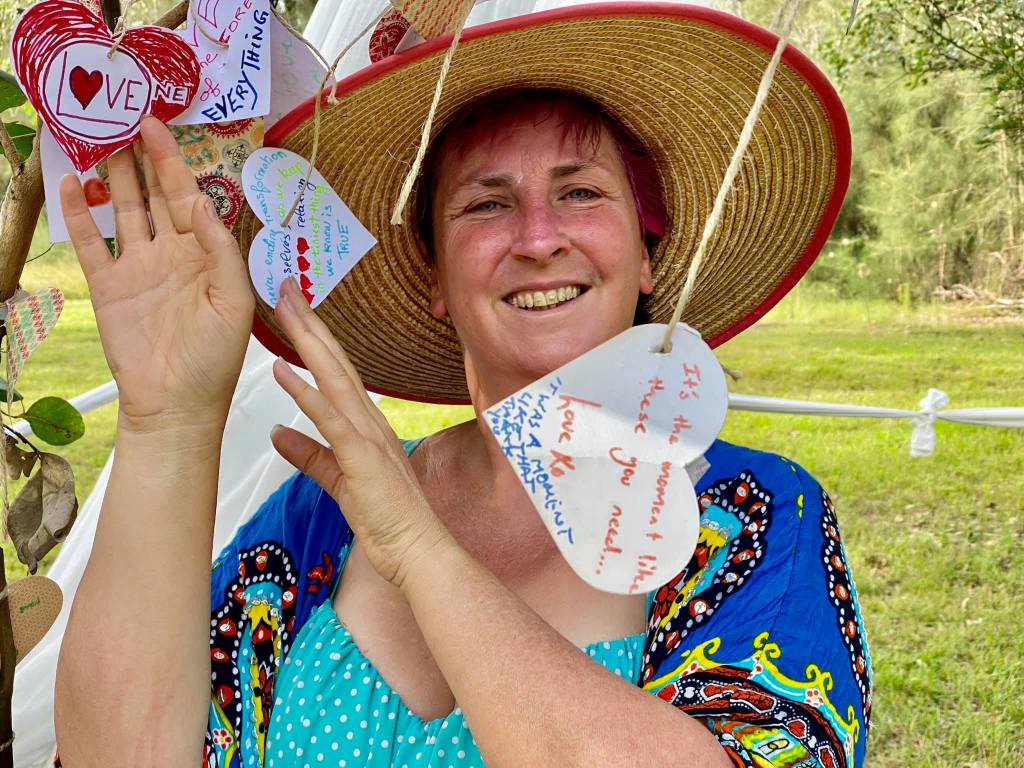
This is the first iteration – but hopefully not the last. There have been a number of collaborators to get to this point but I would love more. I’m excited to see how this will evolve and change over time. How will it be received in different places, communities, context? How could different types of love be experienced as an immersive, interactive space?
 The Artful Bea